
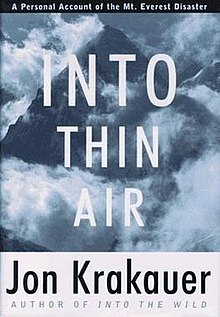
Into Thin Air has been on my reading list since 2015, since that day in the theatre when I sat in equal measures of awe [for the mountain] and horror [at the deaths] that was the 1996 Everest Expedition.
Full of an overwhelming curiosity to dwell deeper into the micro decisions made on that day, I picked up the book by Jon Krakauer, who was one of the survivors of the expedition himself. It took me 5 years since to get down to actually soaking up the book, but the experience, in my opinion, was well worth the wait.
The book begins at the summit, narrated from the authors eyes, and it takes us back to base camp and slowly ascends to higher altitudes. The narrative is simple and clear to understand. Despite the sheer number of people that we are introduced to quite early on in the book, Krakauer does a commendable job of keeping the reader connected to the people on the expedition through their stories, mannerisms and quirks; reflected quite clearly in his writing.
[R]eaders are often poorly served when an author writes as an act of catharsis, as I have done here. But I hoped something would be gained by spilling my soul in the calamity’s immediate aftermath, in the roil and torment of the moment. I wanted my account to have a raw, ruthless sort of honesty that seemed in danger of leaching away with the passage of time and the dissipation of anguish.
– Jon Krakauer
What sticks out the most to me, in the book, is the vulnerability with which Krakauer expresses his emotions. In doing so, not only is he able to capture the attention of the readers throughout the narrative; he is also able to string them along. I found myself getting so thoroughly lost in his world that it often took me a few seconds to come back to a reality approximately 28,000 feet below, in the comforts of my own home.
Through this book, we summit the Sagarmatha (as the Nepalese called the mountain) as his team member. We feel the pain, the exhaustion, and the ordeal that comes with putting our bodies through such an endeavour.
When I rest I feel utterly lifeless except that my throat burns when I draw breath.… I can scarcely go on. No despair, no happiness, no anxiety. I have not lost the mastery of my feelings, there are actually no more feelings. I consist only of will. After each few metres this too fizzles out in unending tiredness. Then I think nothing. I let myself fall, just lie there. For an indefinite time I remain completely irresolute. Then I make a few steps again.
– Jon Krakauer
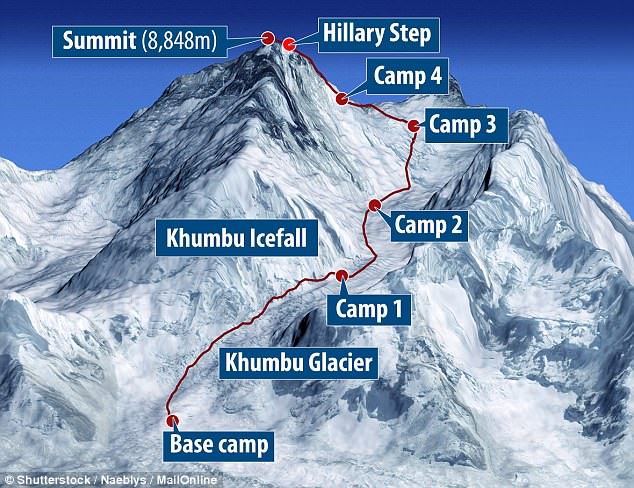
We also feel his horror, his helplessness at being unable to do more, to save more lives. Crawling back into the relative safety of camp 4, I breathed a sigh of relief. Descending to base camp after the accident, to some measure I was able to empathize with his loss; at his own disbelief at having committed lapses in judgement that might have potentially costed lives.
We were too tired to help. Above 8,000 meters is not a place where people can afford morality.
– Jon Krakauer
As someone who has always been fascinated by the majesty of the mountain, I already knew what the outcome of that day was going to be. Yet, nothing could have prepared me for the experience of living it through his eyes, and through the eyes of the people that shared the day with him.
Krakauer has done a remarkable job of maintaining a balance in characterising people he knew in real life. He is generous in recognising the heroic efforts of his guides and comrades in saving the lives caught in the avalanche without shying back from questioning some of the choices that they made. He does not protagonise himself (for the most part) as a man beyond errors, rather he owns up to them quite candidly.
“[Yasuko Namba] was so little. I can still feel her fingers sliding across my biceps, and then letting go. I never even turned to look back.”
– Quoting Neal Beidleman
By his own admission, Krakauer calls this book ‘an act of catharsis’. The book is weighted down by his trauma, and the guilty conscience he seems to be carrying on his shoulders as a survivor. Even more than that, to me, however was the portrayal of the theme of ‘Man v/s Nature’ and the powerlessness of humans to stand against nature’s raw fury when she decides to strike us.
Undoubtedly a page turner, if there ever was one.
 half-baked tales
This was a great review! I could feel how much you must’ve been fascinated by it.
Also, the quotes at the right places made it much much wholesome!
LikeLiked by 1 person
Thank you Kushal!
LikeLiked by 1 person